
ΔC: Over 20% lower embodied carbon from a drop-in admixture
A carbon-negative, liquid biochar admixture that provides permanent biogenic carbon storage while improving concrete workability, strength, and durability.

About ΔC Technology
A carbon-negative admixture for sustainable concrete
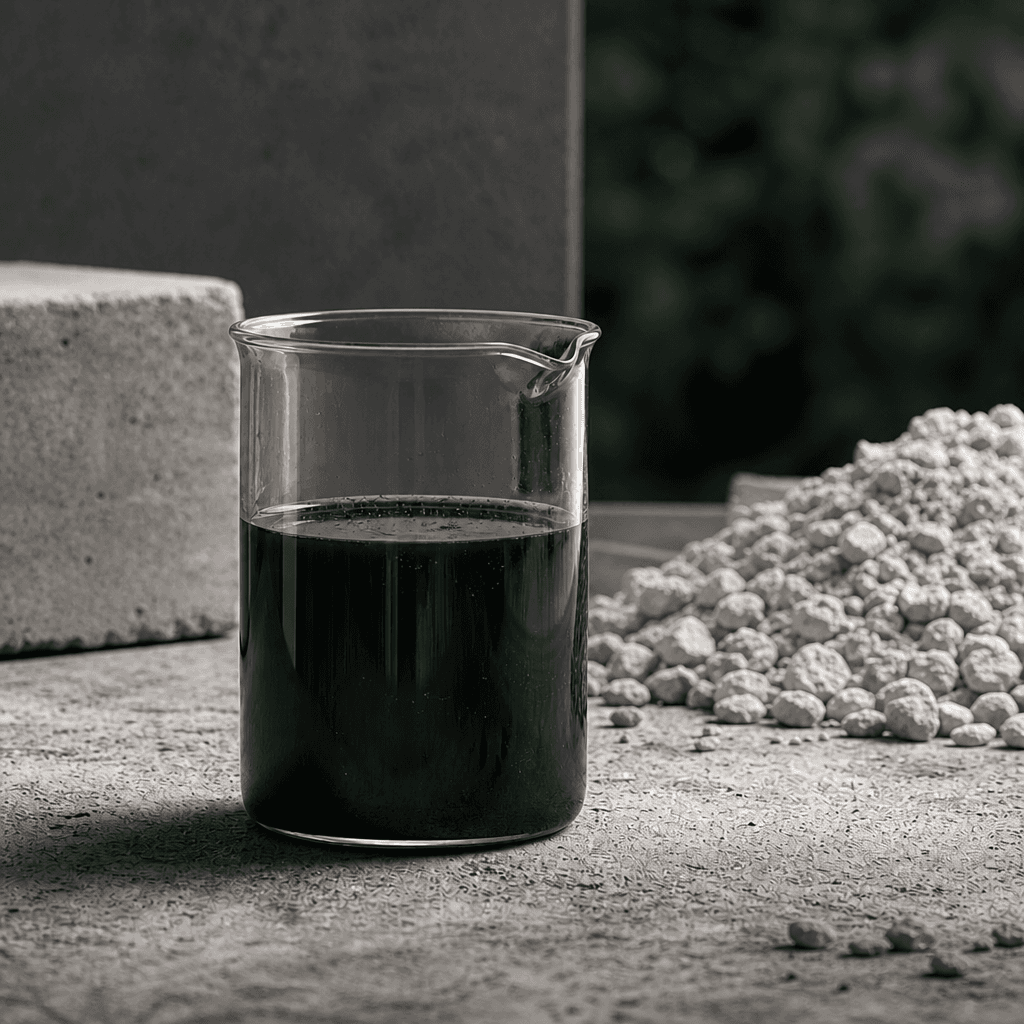
Developed by alterBiota, ΔC is a carbon-negative liquid admixture made from waste biomass (30% solids engineered biochar) using a patented manufacturing process. It doses like any other liquid admixture, no specialty equipment, and no changes to batching, transport, or placement.
ΔC particles act as a filler in the cement paste, improving particle packing, improving strength and durability, while the liquid media acts as a water reducer, improving workability. ΔC enables producers to reduce cement while maintaining or exceeding target performance and permanently stores biogenic carbon. All environmental attributes remain with the customer rather than being sold as carbon offsets.
Better performance and over 20% lower embodied carbon, without rewriting how plants run.
How ΔC works
Two proven mix design strategies
Improved particle packing lets producers reduce embodied carbon through two approaches, chosen to match project risk and target performance.
Cementitious Replacement
Replaces a portion of cement (the primary source of embodied carbon) or SCMs by volume through improved particle packing, while holding target performance. Greater GWP savings from both carbon storage and cement or SCMs displacement.
Sand Replacement
Replaces a portion of fine aggregate by volume, keeps mortar volume constant, and leaves the binder system untouched. A lower-risk carbon storage with immediate GWP reduction.

Key benefits
Lower GWP: a carbon-negative admixture for the concrete industry
Store biogenic carbon, reduce cement where the mix allows, hold performance, and dose ΔC like any other liquid admixture. No need to rewrite how the plant runs.
Over 17% from carbon storage
Permanent biogenic carbon storage of 22–50 kg CO₂e per m³
Up to 8% from carbon avoidance
Improved particle packing lets producers reduce Portland cement (over 20 kg CO₂e per m³) while holding powder volume and target performance.
Improved early strength
Enhanced early strength compared to other low carbon solutions, without compromising durability. If it isn't durable, it isn't sustainable.
Drop-in. No plant changes.
Doses like any other liquid admixture on standard batching systems.
In the lab
Lab-validated results
Third-party–verified fresh, hardened, and durability performance for low-carbon concrete developed with ΔC.
Lower permeability
uOttawa durability validation
Improved durability based on RCPT testsField validation
Proven on real pours
Field-measured performance of low-carbon concrete developed with ΔC
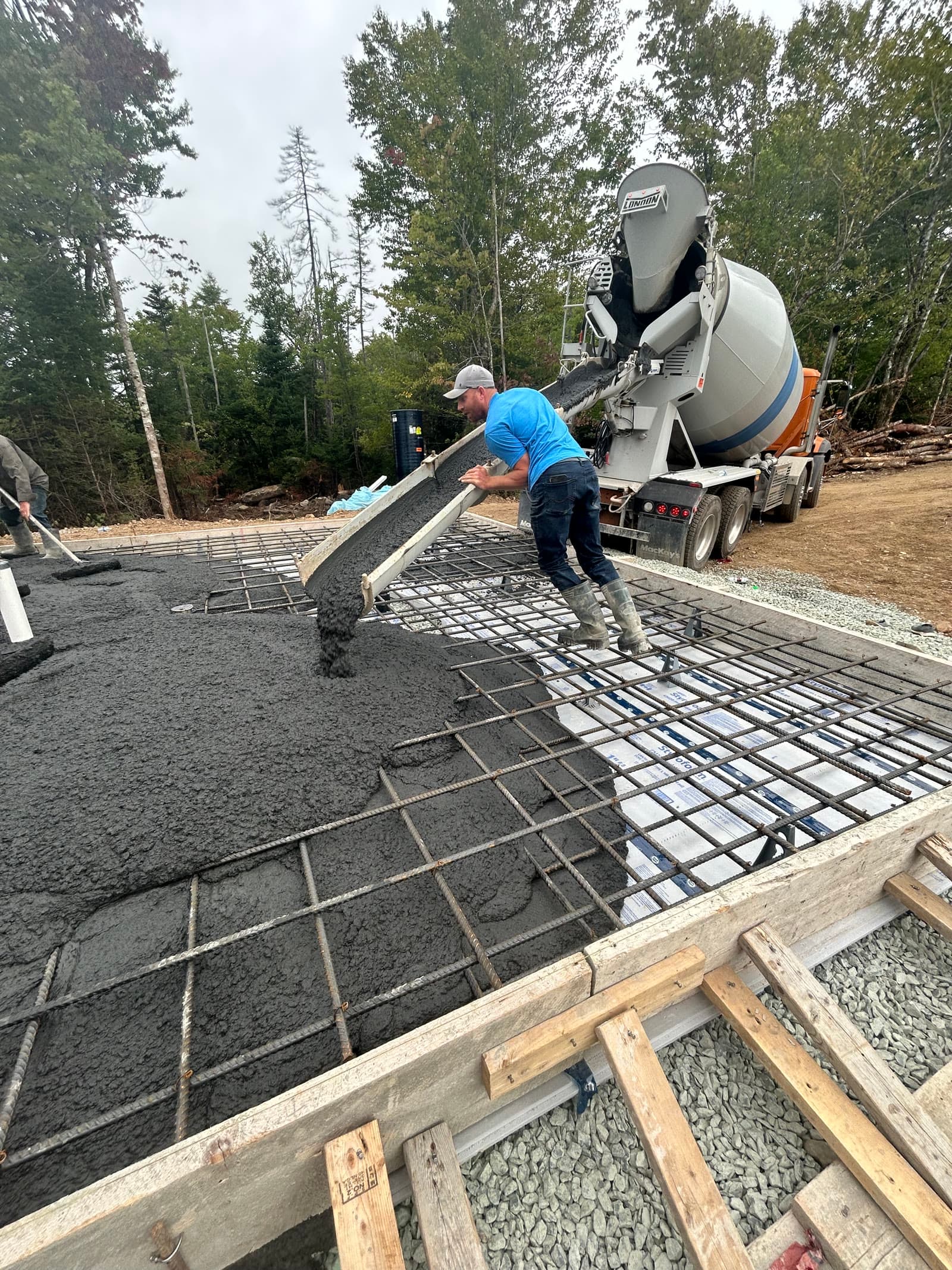
Moser River, NS
CarbonRun Silo Foundation
ΔC was used in the foundation pour for CarbonRun's outdoor silo, reducing embodied carbon by 21% while surpassing target strength in just 3 days.
−21%
embodied carbon
40 MPa
at 3 days
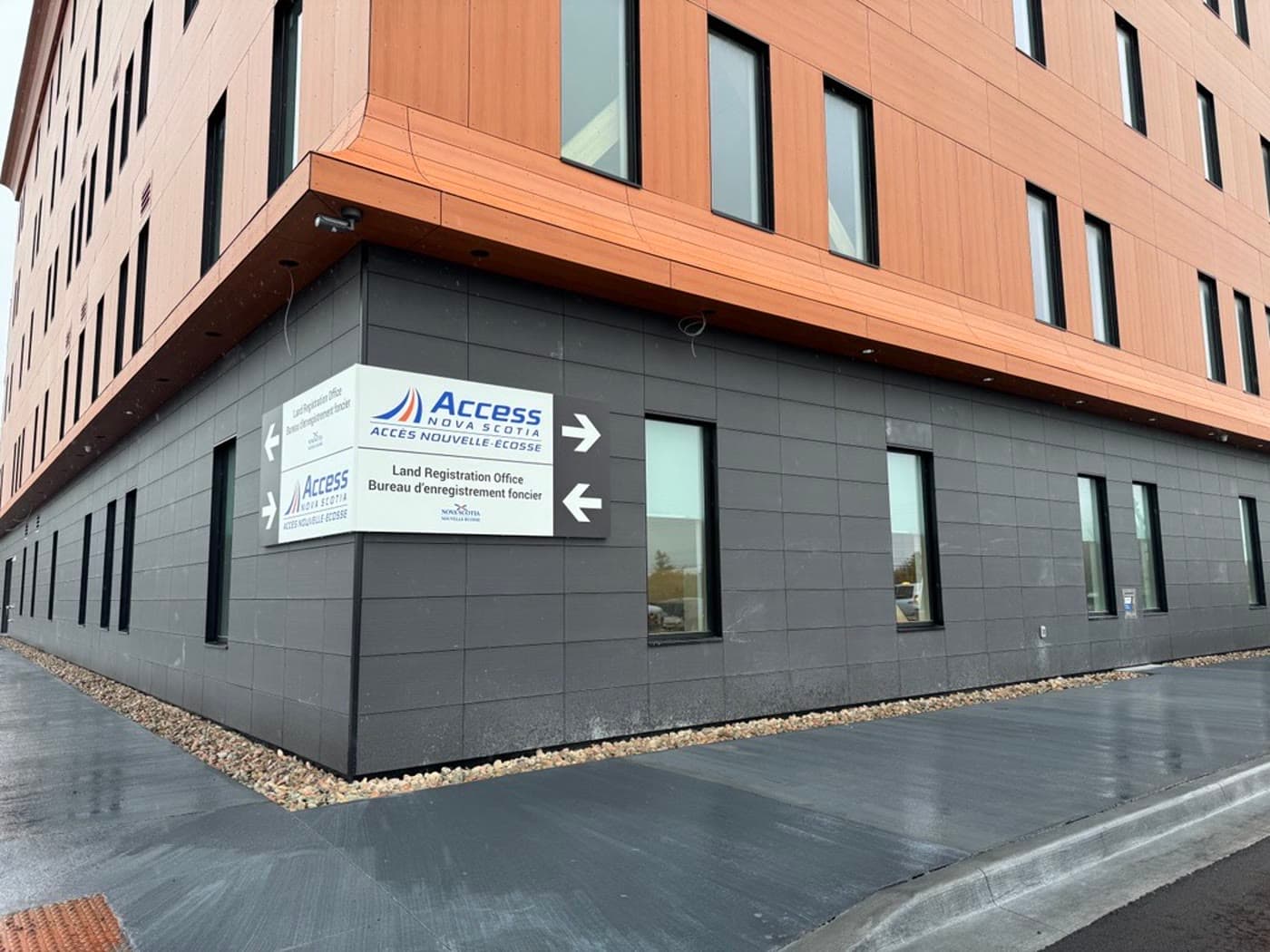
Membertou, NS
Access Nova Scotia Building
ΔC was used in 70 m³ of sidewalk and curb air-entrained concrete for a new office building, reducing embodied carbon by 13% and storing approximately 40 kg CO₂e per cubic metre, while all batches exceeded the 35 MPa strength target.
−13%
embodied carbon
70 m³
placed across 12 loads
Estimator
How much carbon can you save?
FAQ
Frequently asked questions
ΔC is a carbon-negative liquid admixture made from waste biomass, and the world's first liquid biochar admixture for ready-mix and other concrete producers. It permanently stores biogenic CO₂ in the mix, improves particle packing for better strength and durability, and enables optional cement reduction. The result is >20% lower embodied carbon without changing plant operations.
ΔC is a pumpable liquid dosed like any other chemical admixture using standard batching systems. No specialty equipment, no plant modifications, and no changes to batching, transport, or placement. Typical doses are in the 4–6% range by weight of cementitious materials (w/cm).
ΔC delivers ~10–17% lower embodied carbon from permanent biogenic storage (22–50 kg CO₂e per m³) plus up to ~8% from cement reduction. Together that delivers >20% lower embodied carbon on virtually any mix, and up to ~30% depending on strategy (Sand Replacement and/or Cement Replacement).
ΔC particles act as a filler in the cement paste, improving particle packing. Producers can use Cement Replacement (CR) to reduce Portland cement content while holding powder volume constant, Sand Replacement (SR) to store biochar carbon while keeping mortar volume constant, and/or SCMs Replacement (SCMR) to reduce supplementary cementitious materials while holding powder volume constant, delivering significant GWP savings.
Yes. Third-party testing (CTL Group) exceeded all compliance targets for both ASTM C494 Types A and F. ΔC also showed improved durability in a University of Ottawa durability study, with reduced charge passed (RCPT) across limestone cement, fly ash, and slag mixes.
Concrete producers and their customers retain all environmental attributes associated with ΔC-enabled mixes. No carbon offsets are claimed by alterBiota.
Over 100 m³ of ΔC concrete has been placed across projects with 6 concrete producers, saving over 5 t CO₂e. At CarbonRun's silo foundation, a 5%ΔC-CR mix achieved a 21% embodied carbon reduction and exceeded 35 MPa at 3 days. At Mi'kma'ki Place, 70 m³ of 4%ΔC-SR sidewalk and curb concrete achieved a 13% reduction with all batches exceeding 35 MPa.
Ready to trial ΔC in the field or lab?
Reach the team about samples, mix trials, or how ΔC fits your mix designs.